Why it matters
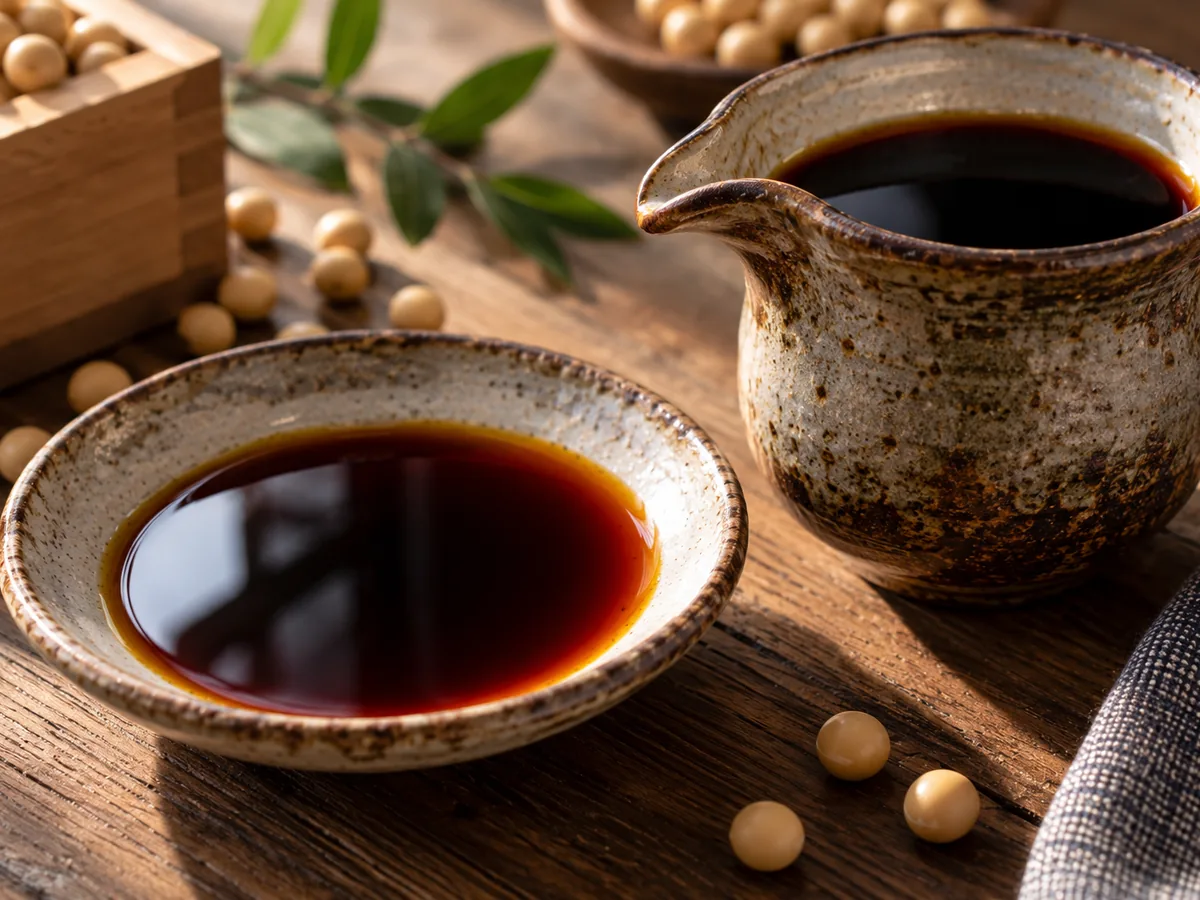
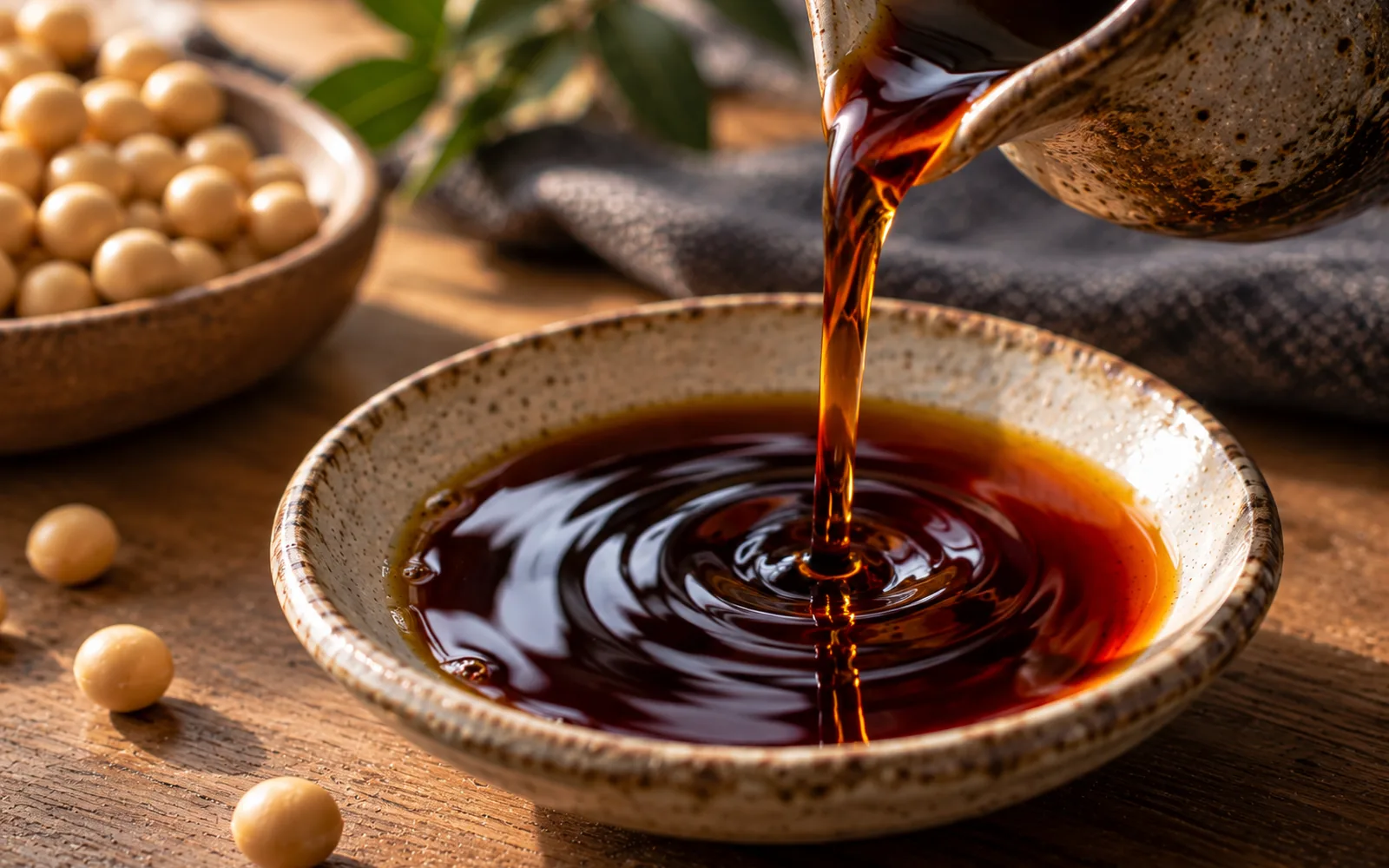
Soy sauce can season broths and sauces, deepen marinades and provide a finishing or dipping seasoning. Its strength means it should be balanced with the salt already present in stocks, miso and other condiments.
Place & tradition
MAFF describes five principal Japanese soy-sauce categories: koikuchi, usukuchi, tamari, saishikomi and shiro.Regional production and cooking traditions influence which style is preferred and how it is used.
In the kitchen
01
Add soy sauce incrementally and taste before adding separate salt.
02
Choose a lighter or darker style for the dish rather than assuming every soy sauce behaves identically.
03
For marinades and sauces, account for soy sauce as both a liquid seasoning and a source of salinity.