
South Korea · lunch · snack
Pajeon
South Korea through one enduring dish.
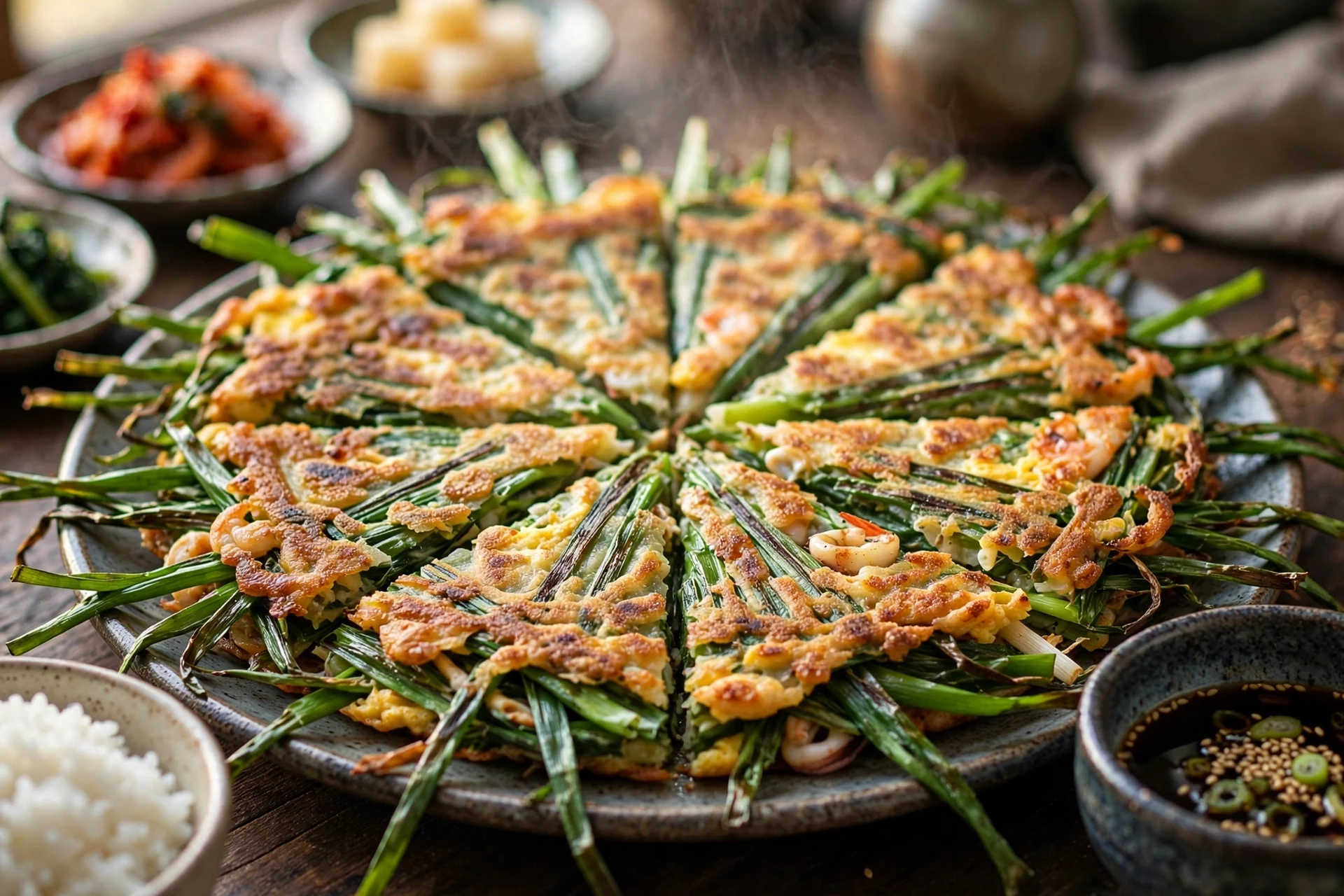
Pajeon is a Korean green-onion jeon in which long spring onions are held together by a thin batter and shallow-fried until the surfaces are crisp while the onions stay tender and sweet.
- Total
- 35 min
- Difficulty
- Easy
- Serves
- 4
- Steps
- 5
The dish
Place first. Then the plate.
Pajeon belongs to Korea’s broad jeon tradition. The defining ingredient is pa, or green onion. Korea.net distinguishes basic pajeon from haemul pajeon, the seafood-and-green-onion variation, so Ember & Equator keeps this canonical recipe seafood-free rather than allowing seafood-specific photography to redefine the dish.
Explore South KoreaAt a glance
Origin
South Korea
Region
Across South Korea
Meal
lunch · snack
Guided steps
5
Dish
Pajeon
Cuisine
Korean cuisine
Food type
Lunch · Snack
Technique
Fry
Cook the recipe
In the kitchen
Start with the ingredients, then follow the Method in order. Open cooking tips only when you need extra help; the story and references can wait until you are ready.
- Total
- 35 min
- Serves
- 4
- Level
- Easy
- Visual cues
- 5
Ingredients
Serves 4- 2 bunchesspring onionstrimmed; split very thick white ends lengthwise and cut to fit the skillet
- 1 cupplain flourall-purpose flour
- 0.25 cuprice flourfor a lighter crisper batter
- 1.25 cupscold waterice-cold
- 1 wholeegglightly beaten
- 5 tbspneutral oilfor shallow frying; add more between sides as needed
- 2 tbspsoy saucefor dipping sauce
- 1 tbsprice vinegarfor dipping sauce
- 1 tbspwaterfor dipping sauce
Optional
- 0.5 wholecarrotcut into fine matchsticks; optional
- 1 tspsesame seedsfor dipping sauce or garnish
Everything ready? Continue straight into the cooking steps.
Start methodMethod
5 steps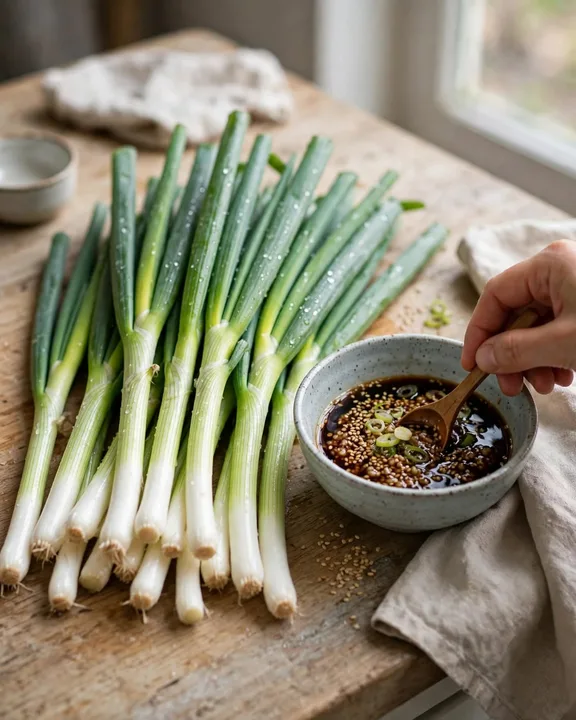 Step 01
Prep the spring onions and mix the dipping sauce
10 min
Trim the spring onions, wash them well and dry thoroughly.
Trim the spring onions, wash them well and dry thoroughly. Cut them to fit your skillet; split very thick white ends lengthwise so they cook at the same rate as the green tops. If using carrot, cut it into fine matchsticks. Mix the soy sauce, rice vinegar, water and optional sesame seeds in a small bowl and set it aside.
Look for
The onions should be dry and flexible with the thickest white ends no more than about twice the thickness of the green stems; the dipping sauce should taste sharp and savoury.
Kitchen note
Surface water on the onions thins the batter and spits in hot oil. Dry them well, and split only the thickest whites so the long onion shape still defines the pancake.
 Step 02
Mix a cold thin batter and lightly coat the first onion batch
5 min
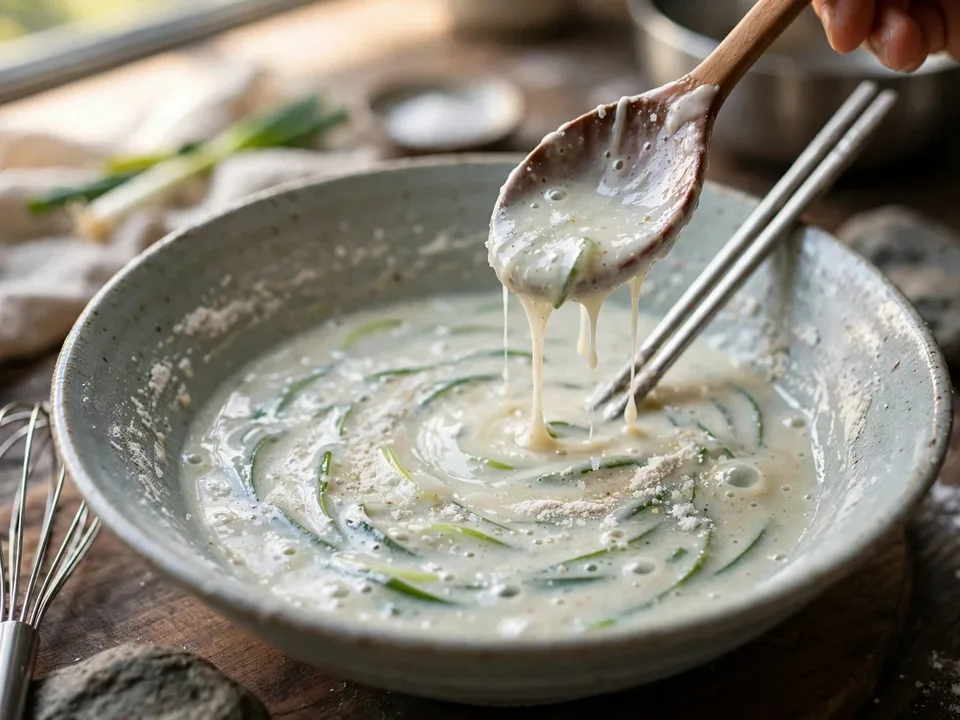
Whisk the plain flour, rice flour, cold water and egg just until combined.
Whisk the plain flour, rice flour, cold water and egg just until combined. Stop while a few small lumps remain; over-mixing develops gluten. Toss or brush the first batch of spring onions with only enough batter to help them hold together rather than burying them in a thick flour layer.
Look for
The batter should pour easily from a spoon and cling in a thin film, with long green onion strands still clearly visible through it.
Kitchen note
Cold batter and restrained mixing support crispness. The batter is a binder around the onions, not the main ingredient; if the scallions disappear completely, there is too much batter. The batter should coat a spoon thinly and drip readily. If it sits in a thick mound, add cold water a tablespoon at a time; if it runs off like water, add a small spoonful of flour.
 Step 03
Lay out the onions and crisp the first side
5 min
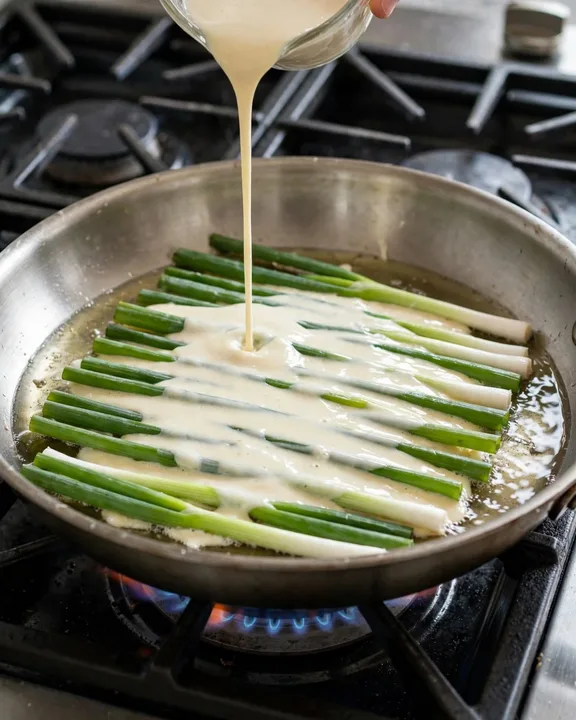
Heat a wide skillet over medium-high heat and add 2 tablespoons of oil.
Heat a wide skillet over medium-high heat and add 2 tablespoons of oil. When the oil shimmers, arrange the battered spring onions in a fairly even single layer, add optional carrot between them and spoon over just enough extra batter to connect the gaps. Press lightly with a spatula and cook for 4–5 minutes, rotating the pan if needed.
Look for
The edges should look crisp and set, the underside should be deeply golden, and the whole pancake should move as one piece when the pan is shaken.
Kitchen note
Do not attempt the flip just because the clock says so. The underside must form one cohesive deeply golden sheet first; if the middle slides separately from the edge, give it more time. Use enough oil to visibly film the pan. If the centre remains pale while the edges brown, lower the heat slightly and wait for the centre to set before attempting the flip.
 Step 04
Flip, re-oil and crisp the second side
4 min
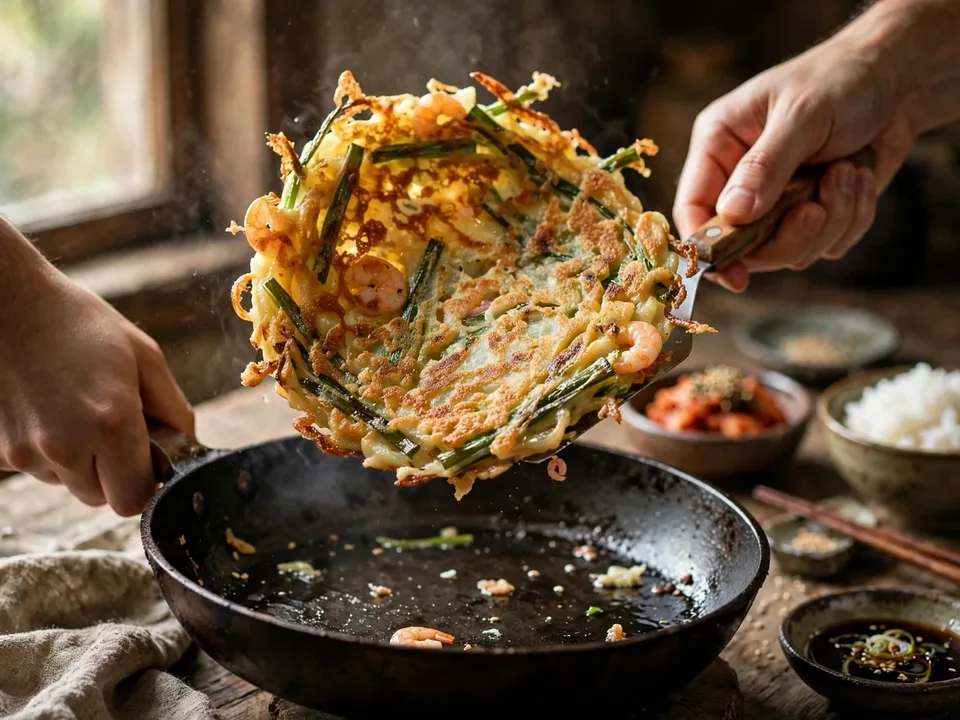
Slide a wide spatula fully under the pancake and flip in one confident motion, or slide it onto a plate and invert it back into the skillet.
Slide a wide spatula fully under the pancake and flip in one confident motion, or slide it onto a plate and invert it back into the skillet. Add another 1–2 tablespoons of oil around the edge and tilt the pan so oil reaches the new underside. Cook for 3–4 minutes, pressing gently once or twice, until the second side is crisp and no gummy batter remains in the centre. Repeat with the remaining onion batch.
Look for
Both faces should be golden and crisp at the edges, the centre should feel set rather than squishy, and the spring onions should be tender without turning limp and grey.
Kitchen note
Fresh oil after flipping is important because the first side absorbs much of the initial fat. Add it around the edges rather than pouring over the top so the new underside fries instead of steaming. If a full-pan flip feels unsafe, slide the pancake onto a plate and invert it back into the pan rather than forcing an airborne flip.
 Step 05
Rest briefly, cut and serve immediately
3 min
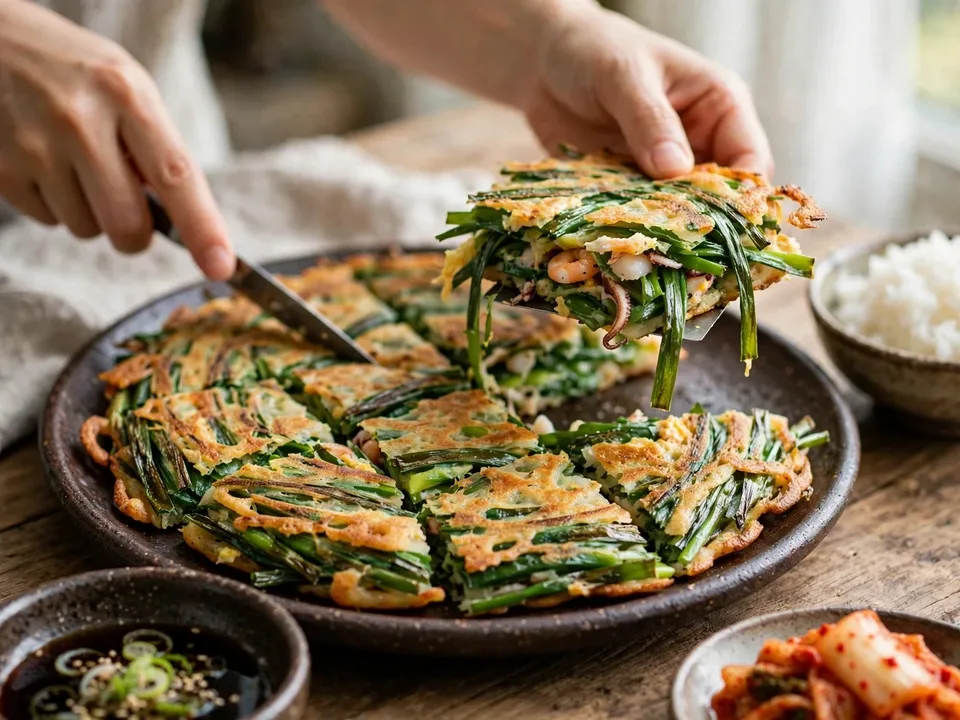
Move each pajeon to a rack or board for 1–2 minutes so surface steam can escape, then cut into bite-size squares or strips.
Move each pajeon to a rack or board for 1–2 minutes so surface steam can escape, then cut into bite-size squares or strips. Serve hot with the soy-vinegar dipping sauce. Keep finished pancakes in a single layer rather than stacking, which traps steam and softens the crust.
Look for
The cut pieces should hold together cleanly, with crisp browned surfaces, visible tender spring onions and no raw floury band through the centre.
Kitchen note
For leftovers, re-crisp in a lightly oiled skillet or hot oven rather than microwaving. The goal is to restore the fried surface without drying the tender onion interior.
After cooking
Explore the dish beyond the method.
Story, place and references are here for discovery, so they stay out of the way while you cook.
Culture & tradition
The story behind the dish
Origins, evolution and everyday life—read together as part of the recipe's culinary record.
Origins
Korea, within the wider family of jeon pan-fried dishes.
How it evolved
Pajeon ranges from simple green-onion pancakes to seafood-rich haemul pajeon and regional forms such as Dongnae pajeon. These related dishes share frying logic but are not interchangeable names.
Its place today
Commonly eaten as a shared snack, side dish or drinking food, often with a soy-vinegar dipping sauce and popularly associated with rainy days and makgeolli.
Visual archive · plate 01
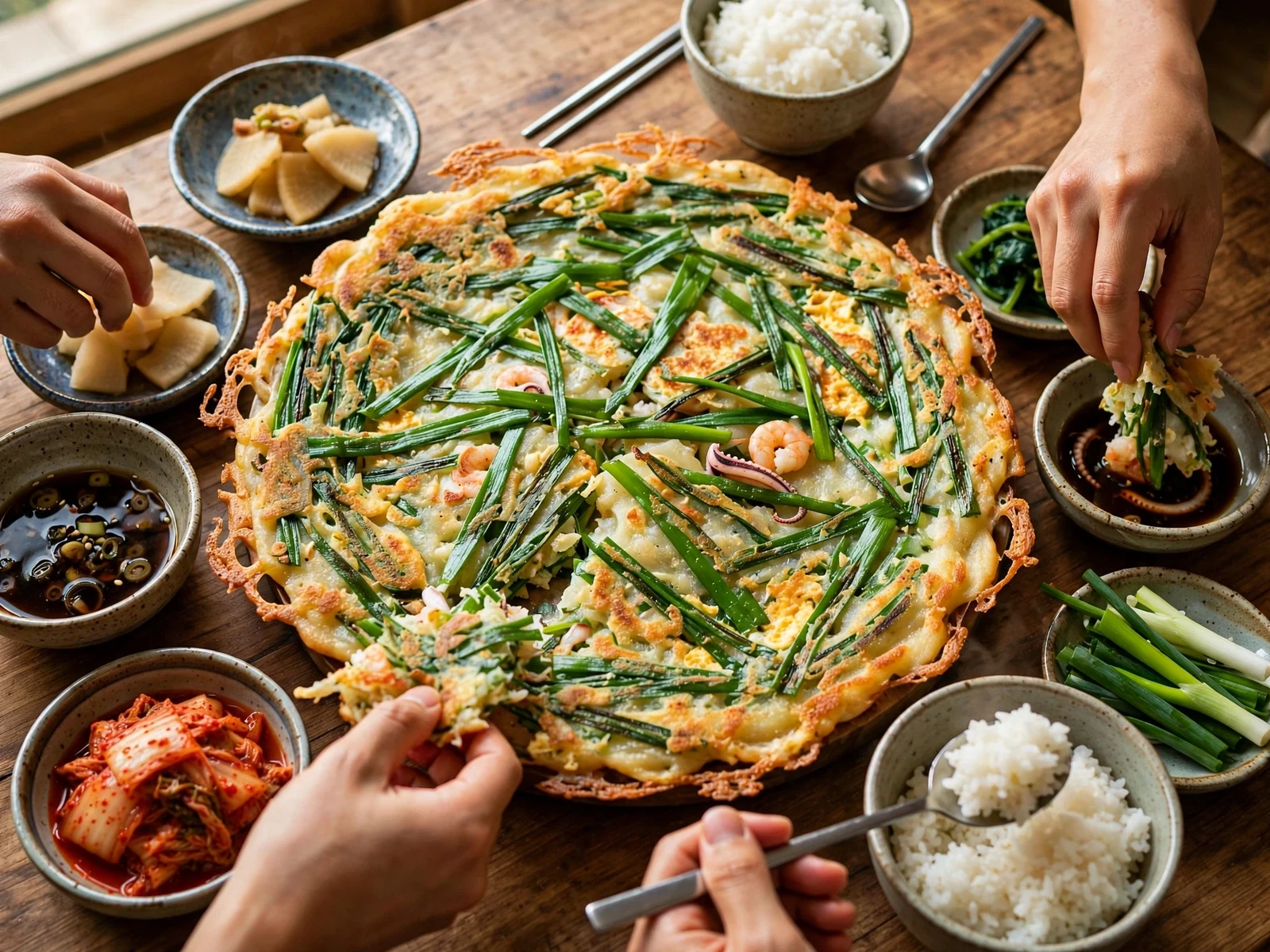
Pajeon
An editorial view of the finished dish, kept compact so the story continues without an oversized image break.
Primary region
Across South Korea
Country
South Korea
Regional influence
Green onions and pantry staples make pajeon adaptable across seasons; shallow frying transforms the onions from sharp and raw to sweet and tender while creating crisp batter edges.
Related food systems
- Korean jeon tradition
- Makgeolli and shared snack culture
- Green-onion dishes
Sources & further reading
Follow the reference trail.
Ember & Equator links outward when an institution or primary reference helps support the culinary record.
- 015 Korean-style pancakes to make at homeExternal ↗
Korea.net · government
Supports: pajeon as green-onion pancake · distinction between pajeon and haemul pajeon · jeon serving context
Ember & Equator source review · 2026-09-17
- 02K-Food Webtoon: PajeonExternal ↗
Korea.net / Korean Food Promotion Institute · government
Supports: pajeon green onion identity · pan-fried batter and scallions · makgeolli and rainy-day context
Ember & Equator source review · 2026-09-17
- 03Korean recipes: Seafood green onion pancake (í•´ë¬¼íŒŒì „)External ↗
Korea.net / Institute of Traditional Korean Food · government
Supports: haemul pajeon as distinct seafood variation · rice-flour batter · medium-heat frying · soy-vinegar dipping sauce
Ember & Equator source review · 2026-09-17
Ingredient guides
Learn about the ingredients behind the dish.
These are reference guides, not a second ingredient list. Follow an ingredient when you want to understand its role, use and wider culinary context.
Ingredient
spring onions
Understand what it contributes, how to use it, and the dishes that reveal it best.
Ingredient
plain flour
Understand what it contributes, how to use it, and the dishes that reveal it best.
Ingredient
rice flour
Understand what it contributes, how to use it, and the dishes that reveal it best.
Ingredient
cold water
Understand what it contributes, how to use it, and the dishes that reveal it best.
Ingredient
egg
Understand what it contributes, how to use it, and the dishes that reveal it best.
Ingredient
carrot
Understand what it contributes, how to use it, and the dishes that reveal it best.
Keep wandering
Where will this dish take you next?
Stay with the place, follow an ingredient or technique, or cross into another food culture. Each path begins with something already present in this dish.
Stay with the place
01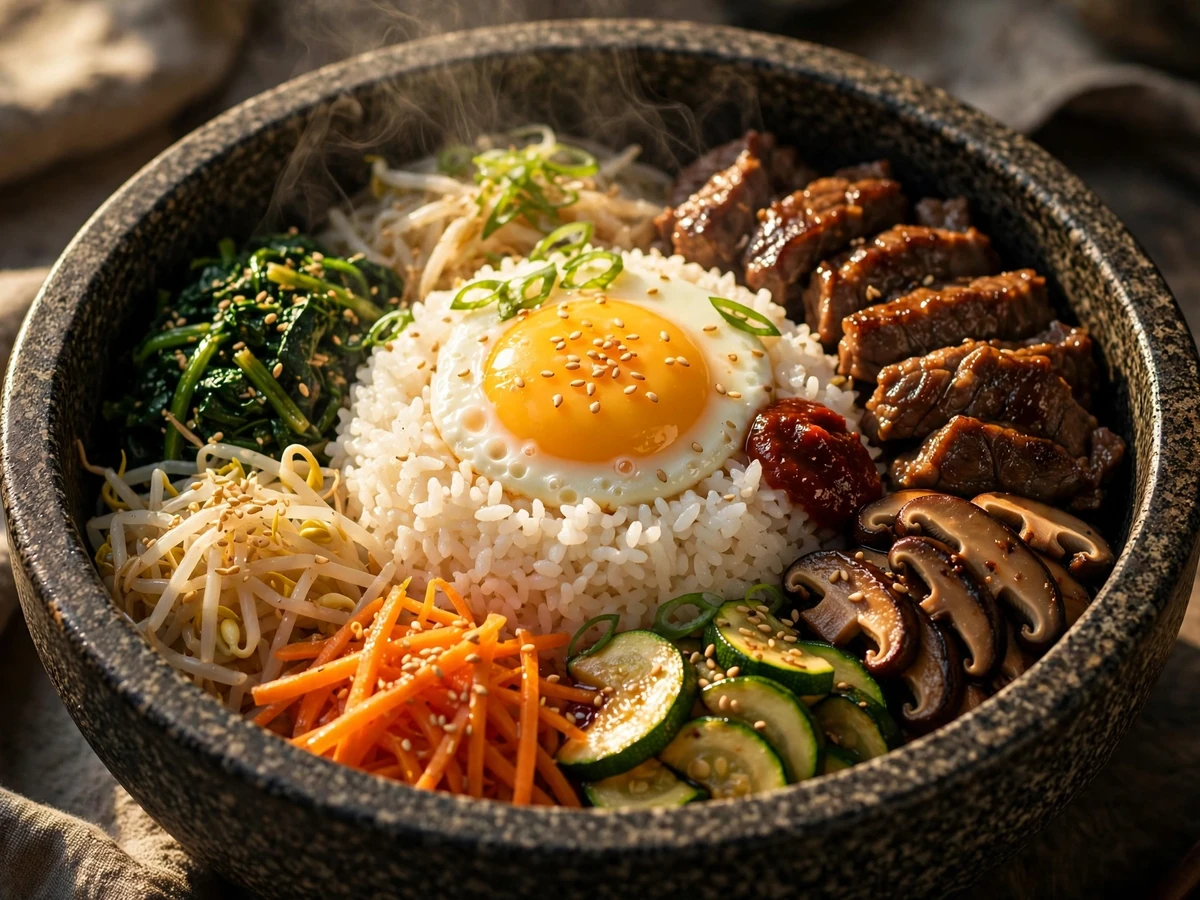
South Korea
Bibimbap
Stay in the same food culture and notice how fry appears in another dish.
Shared thread · Fry · egg · carrot
Follow the method or pantry
02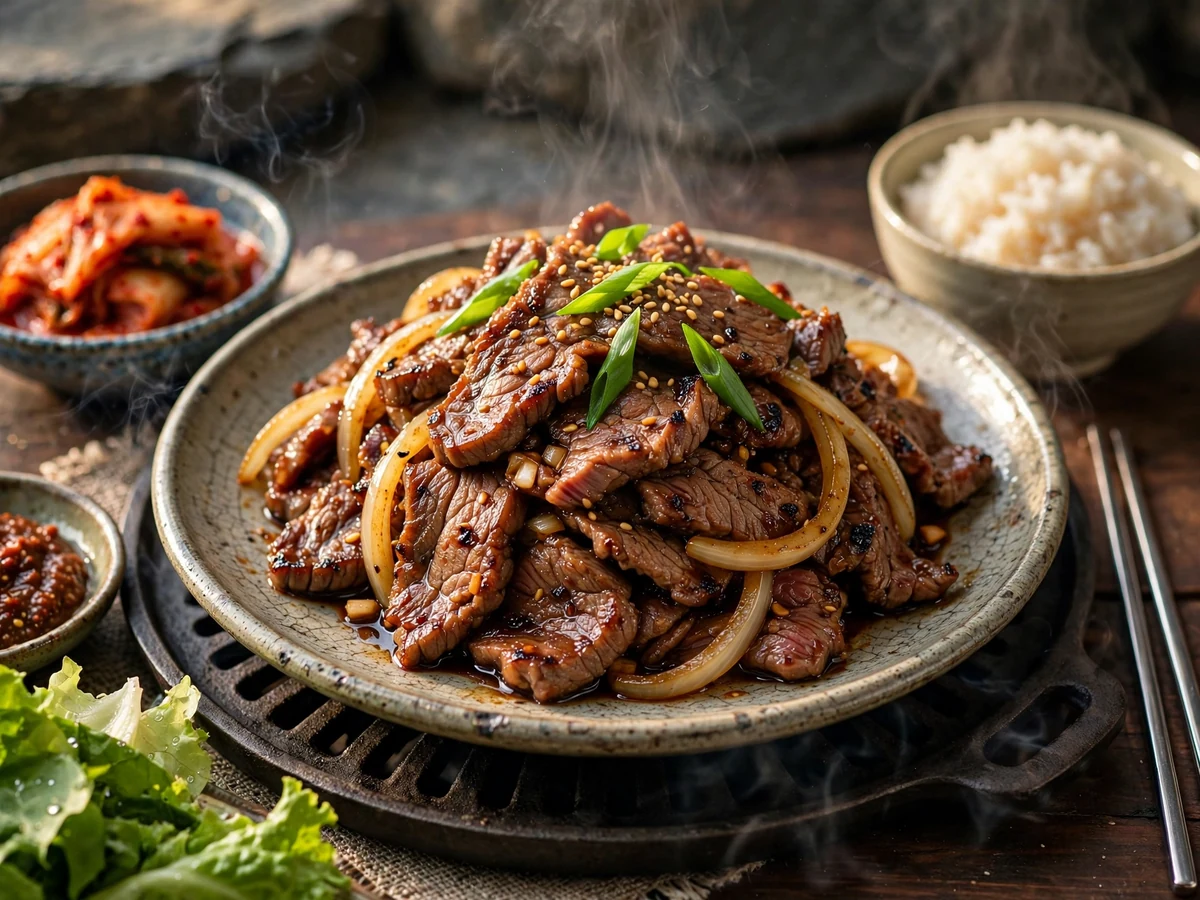
South Korea
Bulgogi
Follow the pantry: both dishes connect through spring onions.
Shared thread · spring onions · carrot · neutral oil
Cross a culinary border
03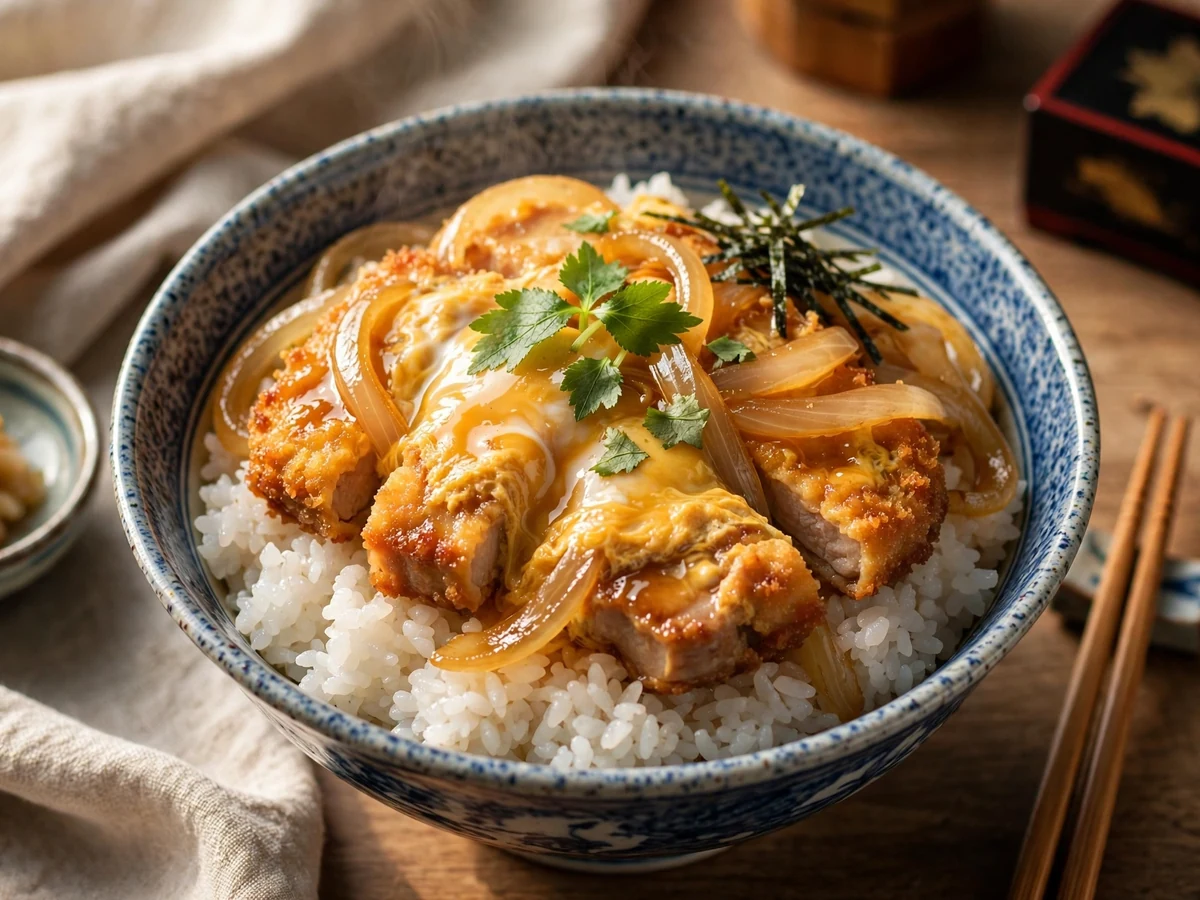
Japan
Katsudon
Cross borders while keeping fry as the common thread.
Shared thread · Fry · plain flour · egg
Go one layer deeper
One small detail can open an entirely different part of food.
Continue in Ember & Equator